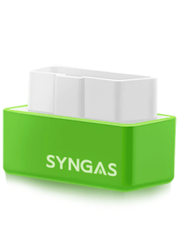
Lower fuel costs without costly modifications – this is how SynGas is being promoted by the supplier in the UK. As part of our review, we took a closer look at whether a small device that simply plugs into the OBD2 port can actually make a measurable difference to driving performance. Many motorists simply accept rising fuel prices as a given, even though modern vehicle technology certainly offers ways to manage fuel consumption more efficiently.
This is precisely where the fuel-saving chip comes in. According to the manufacturer, the system analyses the vehicle’s data via the OBD2 interface and automatically adapts to individual driving habits after a certain distance has been covered. The aim is to optimise fuel consumption without making any permanent changes to the vehicle. As part of our test, we examined whether the SynGas fuel saver chip delivers on these promises.
What is SynGas?

SynGas is a compact device that plugs directly into a vehicle’s OBD2 port. It is designed to optimise fuel consumption. Unlike mechanical solutions, it is an electronic system that works with the vehicle’s data and adapts to individual driving habits. This approach sets the device apart from conventional methods of reducing fuel consumption.
The SynGas OBD fuel saver chip is primarily designed for ease of use. Once plugged in, it begins to collect data and automatically calibrates itself after a certain distance has been driven. According to the manufacturer, it is not intended to make any permanent changes to the vehicle, but simply to utilise existing processes more efficiently.
SynGas Discounts, Voucher Codes & Special Offers
Due to the large number of daily enquiries regarding discount promotions and voucher codes, we have compiled the best current offer for the SynGas Chip exclusively for our readers and listed it below. Please bear in mind that such promotions are often time-limited and are only available via the link below. This special offer is valid only until 4. June 2026.
- Reduces fuel consumption
- Optimises the engine control unit (ECU)
- OBD2 compatibility & easy installation
- No side effects
- Rating: ⭐⭐⭐⭐⭐
👉 CLICK HERE and secure the BEST offer! 👈
You will receive this offer exclusively through us and is only valid until 4. June 2026
SynGas Reviews – Genuine User Experiences and Testimonials
As part of our review, we did not rely solely on the manufacturer’s claims, but specifically sought out genuine user reviews from the UK. Although the fuel-saving chip is presented on the official website with very positive reviews, we also analysed and compared independent SynGas reviews to form a well-founded assessment.
It quickly becomes clear that the majority of feedback relates to the potential reduction in fuel consumption. Many users report that, after a certain settling-in period, lower fuel consumption becomes noticeable. Numerous SynGas fuel saver reviews highlight that this can lead to a noticeable reduction in everyday petrol costs, which makes a financial difference, particularly with regular use.
In addition to the potential for savings, ease of use is also frequently mentioned. Users describe how the device can be installed effortlessly and is ready for use straight away. At the same time, it is emphasised that no technical knowledge is required to benefit from the potential advantages. Furthermore, some users report that driving feels more efficient and smoother over time. This can also help to reduce fuel consumption. The SynGas reviews also praise the compact design and the fact that no permanent modifications need to be made to the vehicle.
Does SynGas Really Work? – Our Test Results And Honest Review
The numerous positive reviews online piqued our interest. To see for ourselves, we put the device through its paces in a practical test. Ordering via the official website was straightforward, and the product arrived within a few days. It was neatly packaged and immediately struck us as compact and unobtrusive.
For the SynGas test, we plugged the chip into the vehicle’s OBD2 port as intended. Installation was completed within a few seconds and required no technical knowledge whatsoever. The vehicle was then used as normal so that the system could gradually adapt to the driving behaviour.
As expected, no noticeable change was felt during the first few journeys, as the system was initially calibrating itself. After covering several kilometres, however, we observed that the driving behaviour seemed more consistent overall. As our test progressed, it also became apparent that fuel consumption could be optimised in everyday use.
Another positive aspect was how easy it was to use. As SynGas remains permanently plugged into the OBD2 port and requires no additional maintenance, it does not create any extra hassle in day-to-day use. Nor was it necessary to adjust the vehicle settings, which makes it particularly straightforward to use.
Conclusion
Overall, our SynGas test leaves a positive impression. Particular highlights include the simple installation and the approach of optimising fuel consumption without the need for technical modifications. The potential savings at the pump are clearly the main focus and can make a noticeable difference with regular use. For motorists who wish to reduce their running costs without making major modifications to their vehicle, this device is a good option.
Are There Any Clinical Studies or Official Tests on SynGas?
For many interested parties, transparent test results and independent reviews are important for realistically assessing a manufacturer’s claims. For this reason, in addition to our own analysis, we have investigated whether there are any official tests or external trials available for the SynGas Chip. The product page itself primarily highlights the optimisation of fuel consumption and adaptation to driving behaviour. However, we were unable to find any specific references to independent testing institutes or published technical studies there.
Instead, online you mainly come across SynGas UK reviews from users focusing on the potential reduction in fuel consumption. Many of these reviews describe how savings at the pump can become noticeable after a certain period of use. These impressions align with our own observations, particularly regarding more efficient driving behaviour following the adaptation phase.
Who Would Benefit From Using This?
SynGas UK is aimed at motorists who wish to reduce their fuel consumption in everyday driving and thereby cut their running costs. The device is particularly appealing to people who drive regularly and want to save money in the long term by using fuel more efficiently. It is also specifically designed for drivers who wish to optimise their vehicle without the need for complex modifications.
As it simply plugs into the OBD2 port and then adjusts itself automatically, it can be used without any problems even by those with no prior knowledge. In principle, SynGas is not restricted to a specific target group. The key requirement is that the vehicle has an OBD2 port. This is the case for most models manufactured from 1996 onwards. As a result, the system is suitable for a wide range of vehicle types and drivers who wish to make their fuel consumption more efficient.
How To Use SynGas – Installation

Unlike complex technical modifications to the vehicle, the SynGas device is connected via the OBD2 port. The device is simply plugged in and is then immediately ready for use. According to the manufacturer, no additional settings or specialist knowledge are required, which makes it particularly user-friendly. Once connected, the chip begins to collect vehicle data and gradually adapts to the driver’s individual driving style. This calibration phase takes place automatically whilst driving and may take a few kilometres.
The aim is to use the vehicle’s existing systems more efficiently without making any permanent changes. It is important that the device remains permanently in the OBD2 port so that it can operate continuously. No further adjustments or interventions are necessary, which makes the SynGas application very simple and suitable for everyday use.
How Does SynGas Work And When Will We See The First Results?
According to the manufacturer, SynGas works by analysing vehicle data via the OBD2 port. The device analyses the vehicle’s existing systems and gradually adapts to individual driving behaviour. The focus is on more efficient fuel usage through the optimisation of existing engine operating processes. The aim is to reduce fuel consumption without permanently altering the vehicle’s basic settings.
As every vehicle and every driving style is different, it is not possible to specify an exact timeframe for measurable results. The manufacturer states that SynGas begins to optimise fuel consumption almost immediately. However, to achieve the best results, it is recommended that you drive for around a week to allow the device to fully adapt to your driving habits.
SynGas Technology Explained
At the heart of the system is an electronic unit that connects to the vehicle via the OBD2 interface and accesses existing driving data. During our analysis, we took a closer look at how this principle is implemented in practice. Essentially, the device uses the information already available in the vehicle to optimise processes more efficiently, without needing to intervene deeply in the vehicle’s systems itself.
Once connected, the SynGas chip begins to evaluate relevant data such as driving behaviour, load conditions and usage patterns. On this basis, it gradually adapts and works towards optimising fuel consumption within the framework of the existing systems. The focus here is not on directly altering the engine management system, but on the intelligent use of the vehicle’s existing parameters.
Automatic calibration is a key part of how the system works. During the first few journeys, the system continuously collects data and gradually adapts. This process takes place in the background without the user having to intervene. The aim is to achieve the most efficient calibration possible, tailored to the individual’s driving style.
What is particularly striking is the simplicity of the technical implementation. SynGas requires no additional software installations or complicated settings and, as a compact device, remains discreetly integrated into the vehicle. Overall, the concept is based on the idea of making better use of existing fuel-saving potential without requiring complex modifications or interventions on the vehicle.
Are There Any Risks Or Restrictions Associated With Its Use?
As part of our investigation, we also examined whether there are any risks or limitations associated with using the SynGas OBD fuel saver. According to the manufacturer, the device is designed in such a way that it does not cause any permanent changes to the vehicle. As it is connected solely via the OBD2 port and accesses existing vehicle data, its use should, in principle, be unproblematic.
However, compatibility is an important consideration. SynGas can only be used in vehicles equipped with an OBD2 port. This is generally the case for models manufactured from 1996 onwards. Vehicles without this interface cannot use the device.
Where Can You Buy SynGas In The UK?
Following our review, many people have expressed an interest in the fuel-saving chip and are wondering where they can buy SynGas in the UK. As part of our research, we have examined various online retailers. To ensure you are actually getting the genuine product, we recommend purchasing it via the manufacturer’s official website. The chip is regularly promoted there with limited-time offers, which can result in a more attractive price. The supplier also offers a money-back guarantee, allowing buyers to test the device within a certain period and return it if they are not satisfied.
However, we were unable to find the SynGas fuel saver in high street shops. The product is currently unavailable in traditional car accessory shops or at well-known retailers. We were also unable to find the product on Amazon or eBay at the time of writing.
How Much Does The Fuel-Saving Chip Cost?
Price is, of course, a key factor when evaluating a product. As part of our research, we therefore took a closer look at the SynGas price on the manufacturer’s official website. Currently, the price for a single unit is €39.99, which is already a reduced promotional price. Those who opt for multiple units can also benefit from tiered discounts. This results in the following pricing structure:
- When purchasing 2 units, the unit price is reduced to €34.99.
- When purchasing 3 units (marked as a bestseller), the SynGas price is €27.65 per unit.
- The largest pack of 4 units offers the best price of €24.85 per unit.
Frequently Asked Questions
During our research, we received numerous questions about the SynGas chip. Below, we provide concise and clear answers to the most important points based on our analysis.
Is SynGas compatible with all car models?
The device can be used in vehicles equipped with an OBD2 port. This generally applies to models manufactured from 1996 onwards, ensuring broad compatibility, a fact confirmed by numerous SynGas Chip user reviews.
Can I revert to my car’s original settings after using SynGas?
Yes, that’s possible at any time. The SynGas fuel saver chip does not make any permanent changes to the vehicle’s electronics. Once the device is removed, the vehicle will function as it did before.
Is SynGas safe for the engine?
According to the information available, the device does not directly interfere with the engine control system, but instead utilises existing data. The SynGas Chip reviews analysed did not report any adverse effects on the engine.
Is SynGas a scam or a legitimate product?
Our investigation has found no evidence of any lack of legitimacy. The way the service works is clearly explained, and many user reviews paint a largely positive picture, particularly with regard to potential savings. We classify the SynGas OBD fuel saver as a legitimate service.
SynGas UK Conclusion
SynGas was developed with the aim of optimising fuel consumption and improving the vehicle’s efficiency. As part of our analysis, we investigated how practical this concept is in everyday use. Its ease of use was a particular highlight. The device simply plugs into the OBD2 port and then operates autonomously in the background. No additional installation work or prior technical knowledge is required.
Our investigation also revealed that the automatic adaptation to driving behaviour is transparent. After a certain distance has been driven, the system begins to calibrate itself and utilise the available vehicle data more efficiently. Many of the SynGas reviews from the UK we analysed also describe how fuel consumption can be reduced in everyday use, resulting in long-term savings on fuel costs.
Based on our own assessment and the analysed user feedback, the overall impression is predominantly positive. The device is particularly impressive due to its ease of use and clear focus on potential fuel savings. For drivers looking to reduce their running costs with minimal effort, we believe the SynGas chip is an interesting option.

Dr. med. Stephen A. Somers, PhD ist promovierter Mediziner mit langjähriger klinischer Erfahrung und Spezialisierung im Bereich Gesundheitsprävention und evidenzbasierter Medizin. Als Fachautor bei revistaavft.com verfasst er fundierte, hochwertige Inhalte auf wissenschaftlicher Basis – verständlich aufbereitet und stets aktuell. Seine Artikel verbinden medizinisches Fachwissen mit praktischer Relevanz für den Alltag.